Mike Trout Is Back at His Best, but the Stats Reveal a Bigger Problem Behind Why the Angels Aren’t Winning
 sammy
sammy 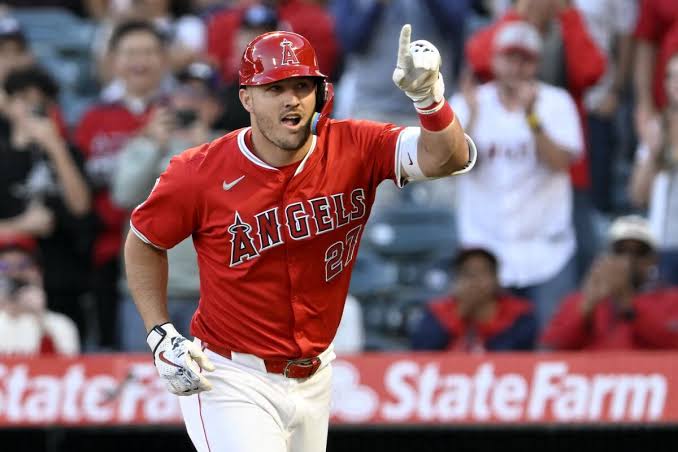
For years, the formula in Anaheim has seemed simple: if Mike Trout stays healthy and performs at an elite level, the Los Angeles Angels should be competitive. Yet in 2026, that assumption is once again being tested—and once again proving flawed.
Trout, firmly on a trajectory that points toward the Baseball Hall of Fame, has rediscovered his vintage form. Early-season metrics highlight his dominance: a 174 wRC+ ranks him among the league’s most productive hitters, level with reigning American League MVP Aaron Judge. A subtle but effective adjustment to his mechanics—particularly his refined back-leg stride—has restored explosiveness to his swing.
Even where traditional numbers seem modest, the advanced metrics tell a stronger story. A .248 batting average may not stand out, but a .431 on-base percentage and .569 slugging percentage confirm his return to elite offensive status.
And still, the Angels continue to struggle.
With a 12–20 record, they sit near the bottom of the American League West standings. More concerning is their recent form: six straight losses and seven defeats in their last eight games. During that same stretch, Trout has been even better, posting a .286/.474/.643 slash line with three home runs. The contradiction is clear—his brilliance is not translating into wins.
The issue is neither new nor subtle: a lack of support in the lineup.
Opposing pitchers, unthreatened by those batting behind Trout, have adjusted their approach. The result is a spike in walks—nine in his last eight games—many effectively “unintentional intentional” passes. There’s little incentive to pitch to one of the game’s greatest hitters when the rest of the lineup poses limited danger.
The supporting cast has struggled to change that narrative. Yoán Moncada has lacked impact, while Jo Adell continues to battle inconsistency. Jorge Soler has shown flashes but not sustained production, and Nolan Schanuel—arguably the most effective of the group lately—cannot shoulder the load alone.
Collectively, the offense behind Trout has been ineffective, leaving the lineup predictable and easy to navigate.
This reality is particularly frustrating given the wider context. The AL West lacks a dominant force this season, offering a genuine opportunity. And for the first time in years, Trout is holding up his end—healthy, locked in, and performing at an MVP level.
But baseball isn’t a one-man game.
The Angels are once again confronting a harsh truth: even a generational talent cannot carry an unbalanced roster to success. Trout can still dominate and deliver, but without meaningful support, his impact is being deliberately neutralized.
In Anaheim, the story hasn’t changed—only the numbers have.